

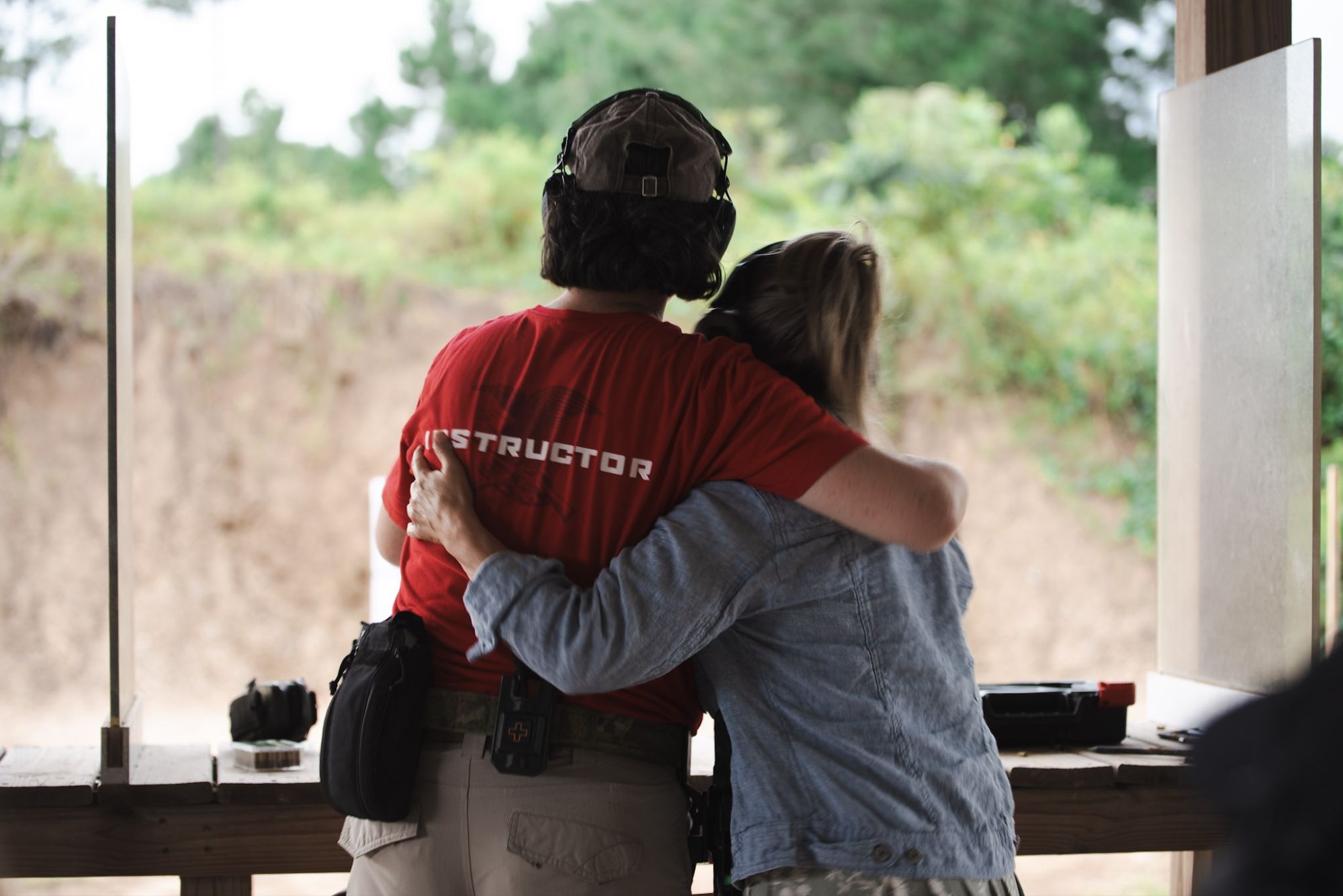
Confidence at the shooting range doesn’t happen overnight. Whether you’re picking up a firearm for the first time or trying to improve your skills, these practical tips can help you feel more comfortable, prepared, and capable.
Walking into a shooting range for the first time can be intimidating. Between the noise, unfamiliar equipment, and experienced shooters around you, it’s easy to feel like everyone knows what they’re doing except you. Here’s something worth remembering: every experienced shooter was once a beginner. Guess what? I’ve been there! I have been the one insecure and nervous at the range. I’ve been the newbie and the one asking for help.
Now, I’ve gotten the opportunity to help women become more comfortable around firearms, including women who had never fired a gun before. One thing I’ve learned is that confidence doesn’t necessarily come from being a naturally good shot. It comes from learning, practicing, and becoming familiar with what you’re doing. Whether you’re interested in recreational shooting, hunting, personal protection, or simply learning a new skill, here are seven ways to build confidence at the shooting range.
1. Start With Proper Instruction
One of the best investments you can make as a new shooter is professional instruction. A qualified firearms instructor can help you understand safe firearm handling, range etiquette, and the fundamentals of shooting before you ever fire your first round. While learning from a spouse, family member, or friend can be helpful, there’s something valuable about working with an instructor who knows how to teach beginners. Look for a beginner-friendly class that covers firearm safety, proper handling, and supervised shooting. There are tones of women-only range day events. Some ranges have ladies nights. Check with your local NWTF Women in the Outdoors or PF/QF Women in the Wing chapters. Those are great places to plug in to women lead spaces. If you’re nervous about joining a large class, consider scheduling a private lesson. Individual instruction gives you the opportunity to ask questions and learn at a comfortable pace.
Remember: You don’t need to know everything before signing up for a beginner’s class. That’s why you’re there!

2. Become Familiar With Your Firearm
It’s difficult to feel confident using equipment you don’t understand. Before heading to the range, take time to learn about the firearm you’ll be using. Familiarize yourself with its controls, safety features, and manufacturer’s instructions. With the firearm completely unloaded, ammunition removed from the practice area, and its condition verified, a qualified instructor can guide you through safe handling and basic operation. Understanding how your firearm functions helps eliminate some of the uncertainty that can make new shooters uncomfortable. Never hesitate to ask questions. Knowing how to handle your equipment safely is far more important than appearing experienced.

3. Wear the Right Gear
Being physically uncomfortable can make an already intimidating experience more stressful. You don’t need an expensive collection of shooting accessories to get started, but a few essentials make a significant difference.
Hearing protection: Shooting ranges are loud, especially indoor facilities. Properly fitted hearing protection is essential. Depending on the environment, using both earplugs and earmuffs may be appropriate.
Eye protection: Wear impact-rated shooting glasses designed to protect your eyes from debris and other range hazards.
Closed-toe shoes: Choose comfortable footwear that provides adequate coverage and stability.
Appropriate clothing: A crewneck shirt or higher neckline can help prevent hot cartridge cases from becoming trapped against your skin. Avoid loose necklines and dangling accessories.
If you’re attending your first class, ask the instructor what equipment is required and whether rentals are available.
4. Choose a Beginner-Friendly Range
Not every shooting range offers the same experience. Some facilities are designed primarily for experienced shooters, while others offer beginner classes, supervised sessions, and additional instruction. When choosing a range, look for one with knowledgeable staff, clearly posted safety rules, and an environment where you’re comfortable asking questions. You can also call ahead and ask whether the facility offers women-focused classes or beginner shooting sessions. A good instructor or range safety officer should make safety expectations clear without making you feel embarrassed about being inexperienced. If a range feels disorganized or unsafe, there’s nothing wrong with choosing another facility.
5. Don’t Compare Yourself to Other Shooters
This is something I wish more women understood. You don’t have to be the best shooter at the range. You don’t have to hit the center of the target every time, and you certainly don’t need to keep up with someone who has been shooting for 20 years. Your goal should be improvement, not perfection. Some days you’ll feel comfortable and confident. Other days, you might struggle with something you’ve practiced dozens of times. That’s part of learning. Rather than focusing entirely on your target, pay attention to what you’re learning during each session. Did you become more comfortable handling your firearm? Did you better understand the instructor’s directions? Did you recognize an area where you need additional practice? Those are meaningful improvements. Confidence grows when you stop measuring your progress against everyone else’s.

6. Find Other Women Who Enjoy Shooting
One of the most encouraging things I’ve experienced is watching women support one another at the shooting range. I’ve helped organize women’s range events where some participants were experienced shooters and others were handling a firearm for the first time. At one event, we had 32 women participate, including six first-time shooters. What stood out wasn’t who had the tightest group on a target. It was watching women encourage one another, ask questions, and celebrate their progress. There’s something special about learning alongside other women who understand the challenges of trying something new. Look for women’s shooting groups, introductory classes, or local range events. You may find a community of women who are happy to help you grow. And once you’ve gained experience, consider encouraging another woman who’s interested in learning.

7. Practice Consistently, Even When Progress Feels Slow
Like any skill, shooting requires continued practice. You don’t have to visit the range every weekend to become more comfortable, but regular, purposeful practice can help reinforce what you’ve learned. Consider scheduling occasional lessons or supervised practice sessions with a qualified instructor. Instead of trying to work on everything at once, identify one skill you’d like to improve during each visit and remember that it’s okay to take a break. If you’re overwhelmed by the noise, feeling fatigued, or having trouble concentrating, stop and reset. There’s no reason to push through a situation where you can no longer focus on safety. A productive range session isn’t necessarily a long one.
Confidence Starts With Taking the First Step
Learning to shoot can be empowering, but that confidence comes with responsibility. You don’t need to prove anything to anyone at the range. You simply need to approach the experience with a willingness to learn, respect for firearm safety, and patience with yourself. I’ve watched women arrive at the range nervous about firing their first shot and leave excited about coming back. That’s what makes introducing women to shooting so rewarding. Whether your goal is to become a more confident hunter, enjoy recreational shooting, or develop greater familiarity with firearms, remember that everyone starts somewhere.
Take the class. Ask the questions. Keep practicing. And give yourself the opportunity to grow.
Safety note: Always follow the fundamental rules of firearm safety, the firearm manufacturer’s instructions, and all posted range rules. Seek qualified, hands-on instruction before handling or firing an unfamiliar firearm.


Leave a Reply